

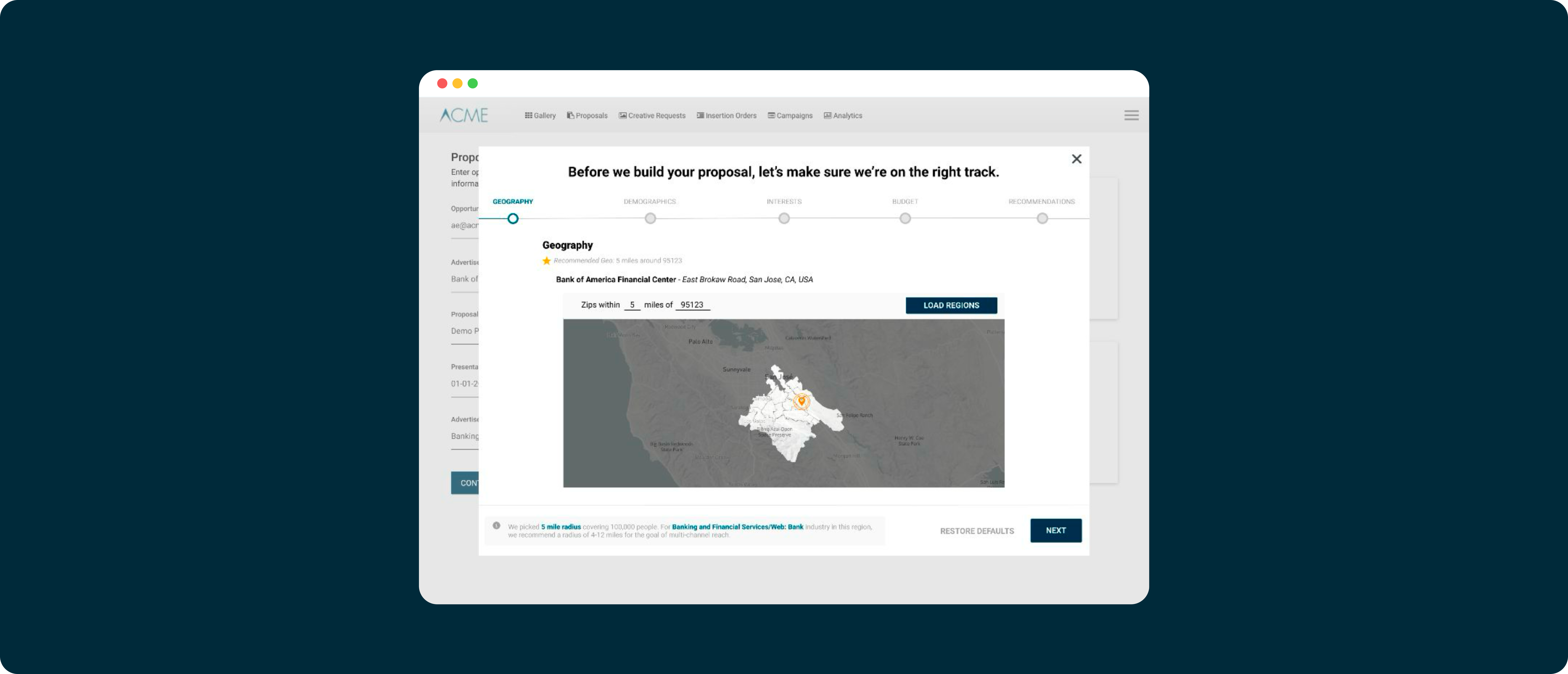
Media proposals are meant to recommend the right audience, channels, and budget for an advertising campaign. In practice, getting there wasn’t simple.
Account Executives were spending a significant amount of time researching markets, comparing past performance, and piecing together recommendations across tools. Even with that effort, proposals could vary widely in quality and often missed opportunities to expand into additional channels.
We saw an opportunity to make this process faster, more consistent, and easier to trust by grouping it in real campaign data.
Creating a strong proposal required too much manual work, and the outcome wasn’t always reliable.
The process was:
As a result, sales teams had less confidence in what they were presenting, which made it harder to upsell or expand campaigns.
How might we help Account Executives create proposals that are both faster to produce and easier to stand behind?
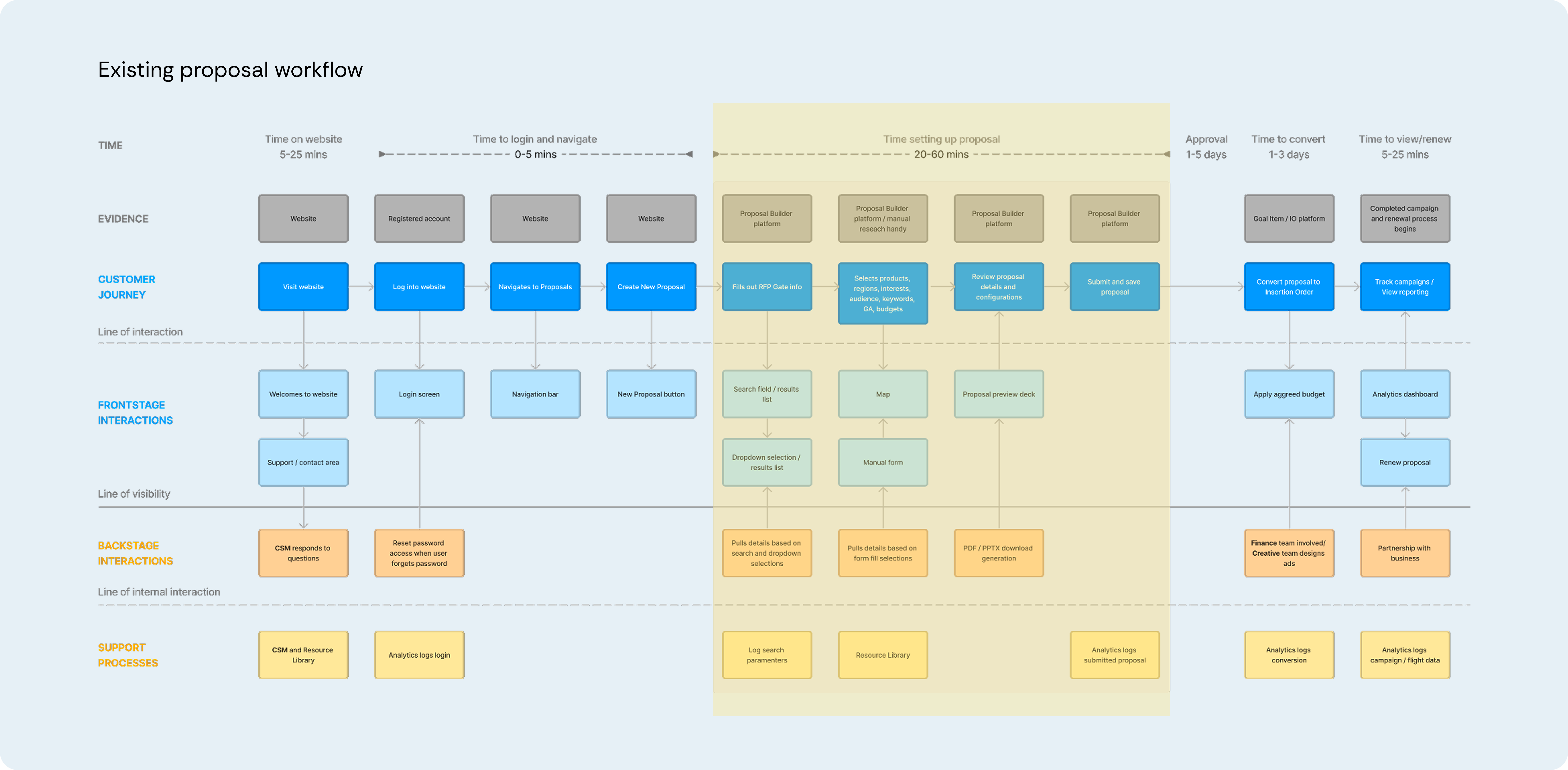
Mapping the existing proposal workflow revealed fragmented steps, manual handoffs, and inefficiencies across the process.
We introduced SmartProposal, a proposal generator built directly into the Frequence platform.
Instead of starting from scratch, users move through a guided flow where they define key inputs—like geography, audience, and budget—and receive recommendations informed by historical performance data.
Our goal was to create a workflow that felt structured, repeatable, and grounded in real signals, so users could move faster without second-guessing their decisions.
Proposal creation involves a lot of moving parts. One of the first things we worked through was figuring out how to break that complexity into something manageable.
We mapped the core decisions—geography, audience, demographics, budget, and channel mix—and translated them into a step-by-step flow. Instead of presenting everything at once, the experience guides users through each decision in sequence, making progress visible and reducing cognitive load.
The interaction model took inspiration from familiar “wizard” patterns, but adapted for this context. It lives as a modal within the platform, reinforcing that this is a focused, lightweight task rather than a separate workflow.
As users move through, certain inputs are pre-filled based on existing data, and recommendations update dynamically. This helped shift the experience from “build everything manually” to “review and refine”.
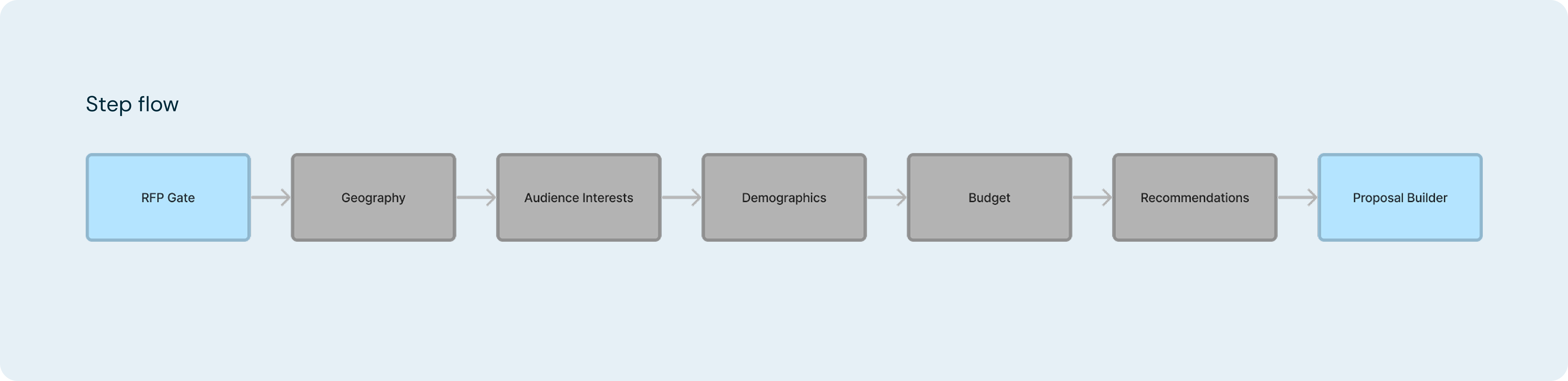
Breaking proposal creation into a clear sequence of decisions, from inputs to final output.
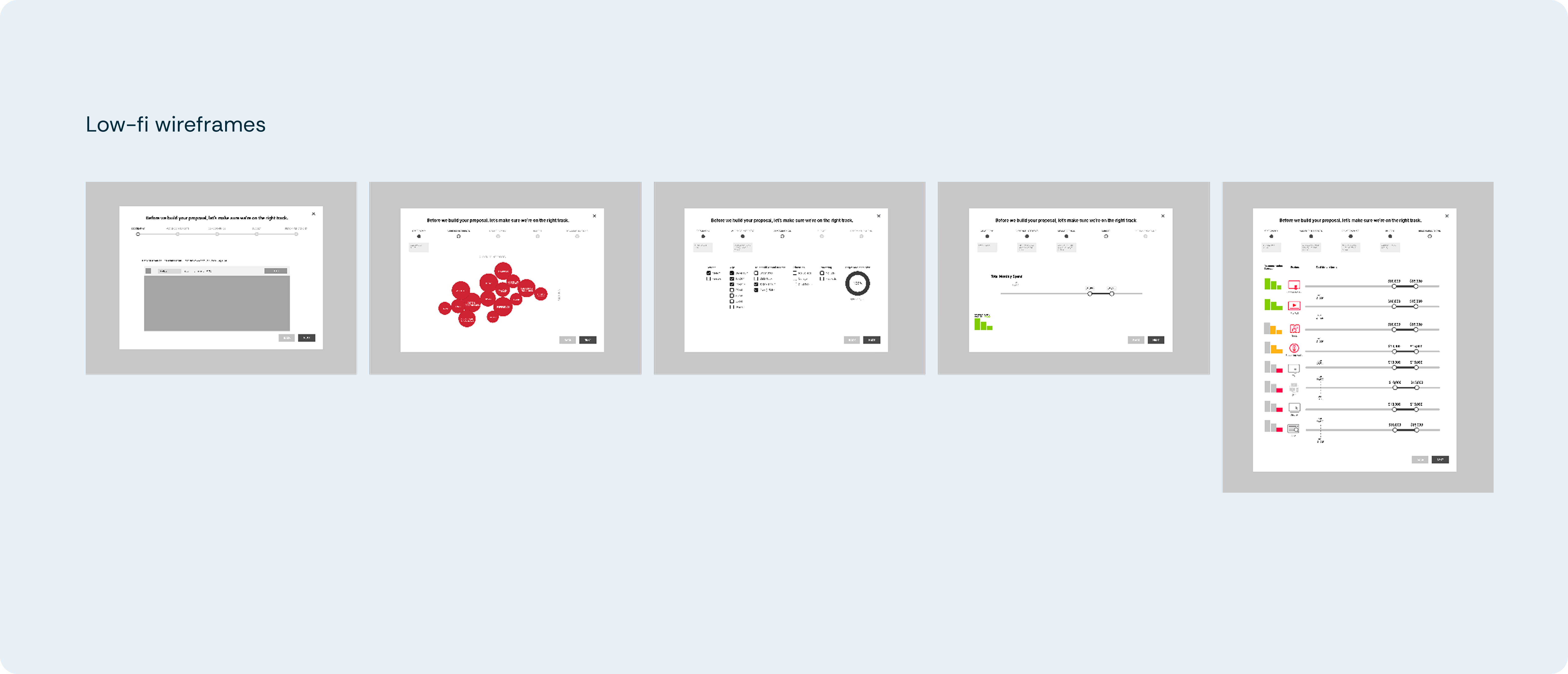
Early exploration of how each step in the flow could guide users from input to recommendation.
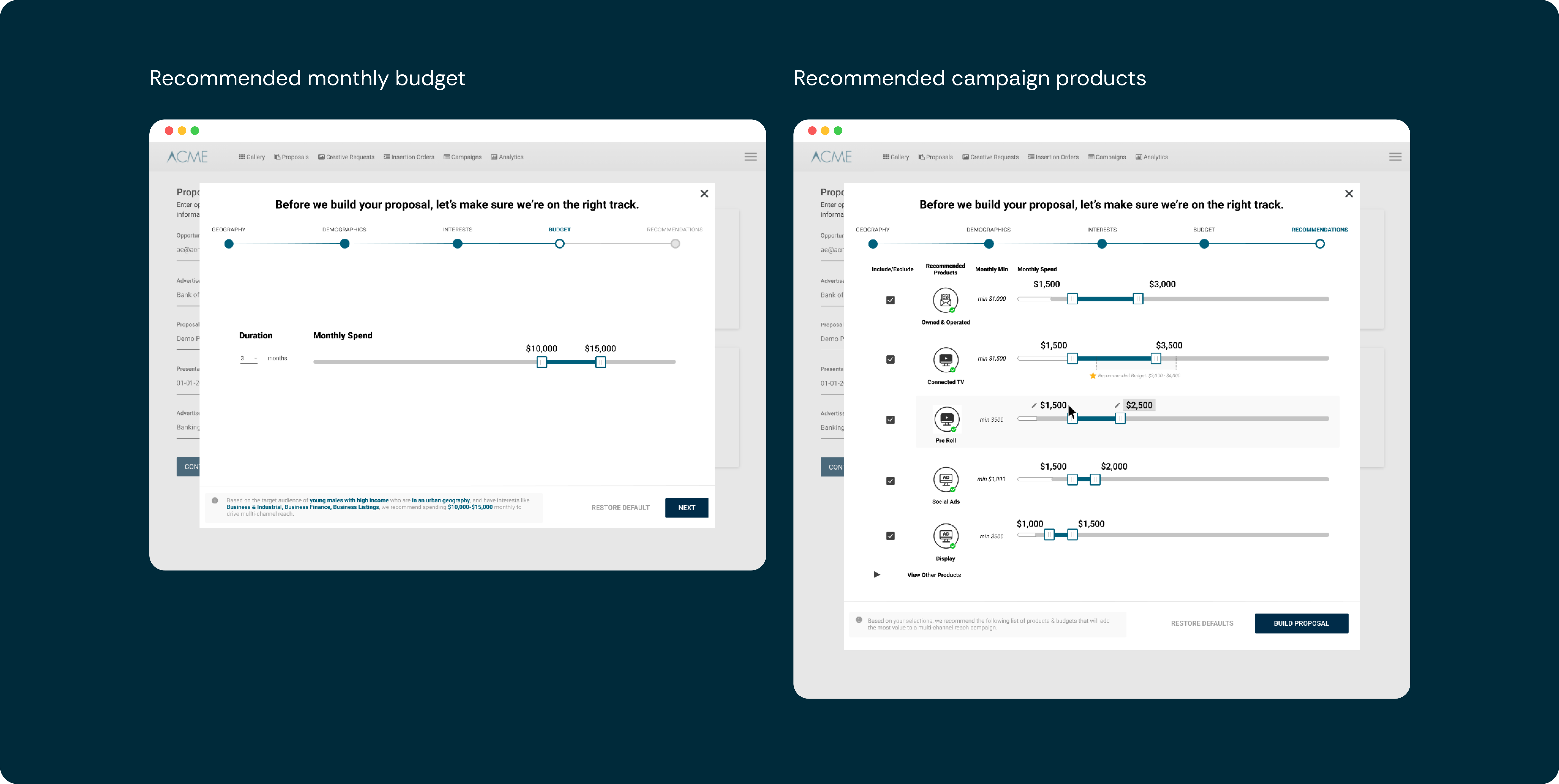
A key challenge was helping users feel confident in the generated recommendations.
Because the system was introducing AI-informed suggestions, clarity mattered just as much as accuracy. In early iterations, we saw moments where users were unsure what was selectable, what was being recommended, or why certain outputs appeared.
We refined the experience by:
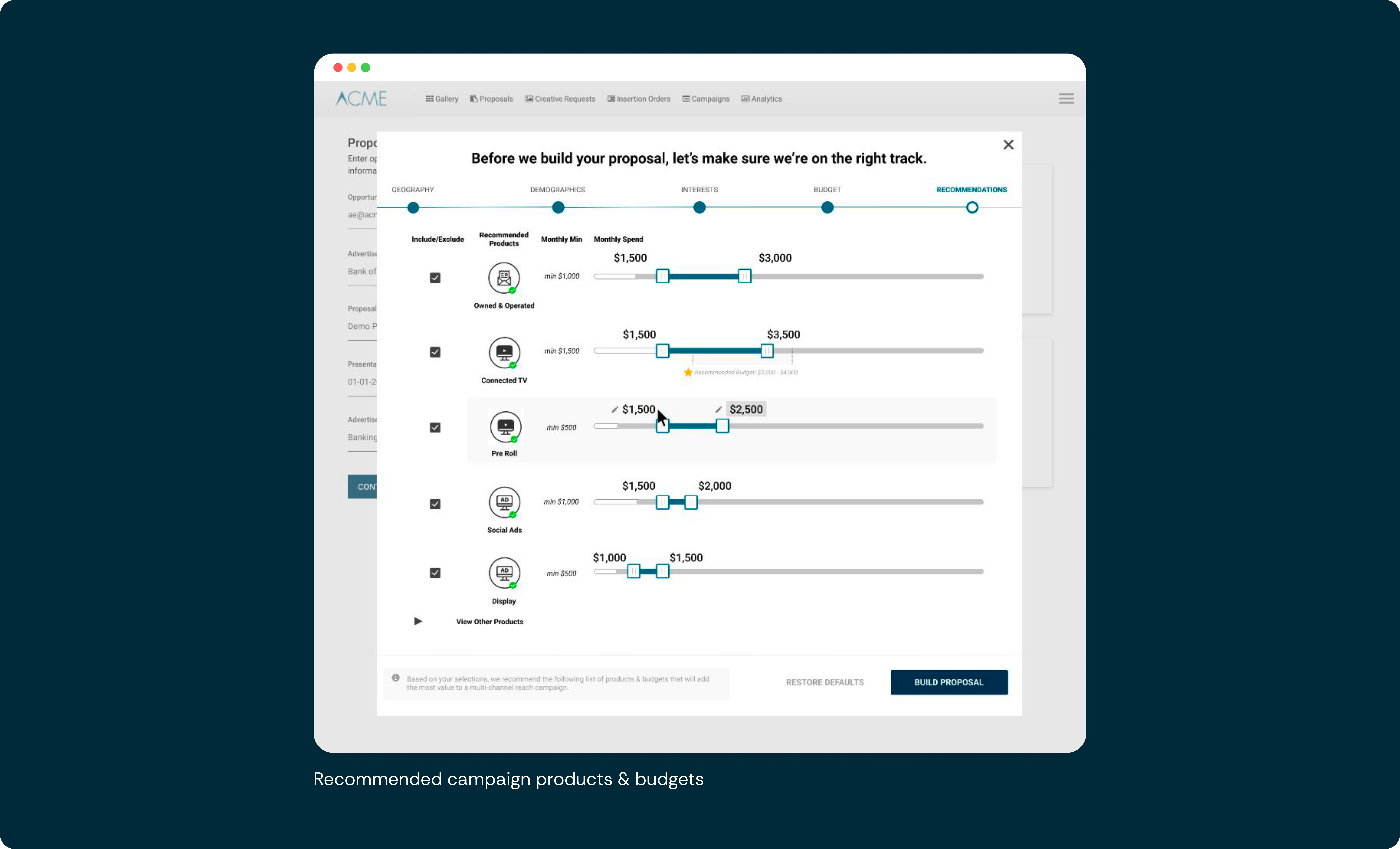
Recommendations alone weren’t enough, users also needed to understand and trust what was being suggested.
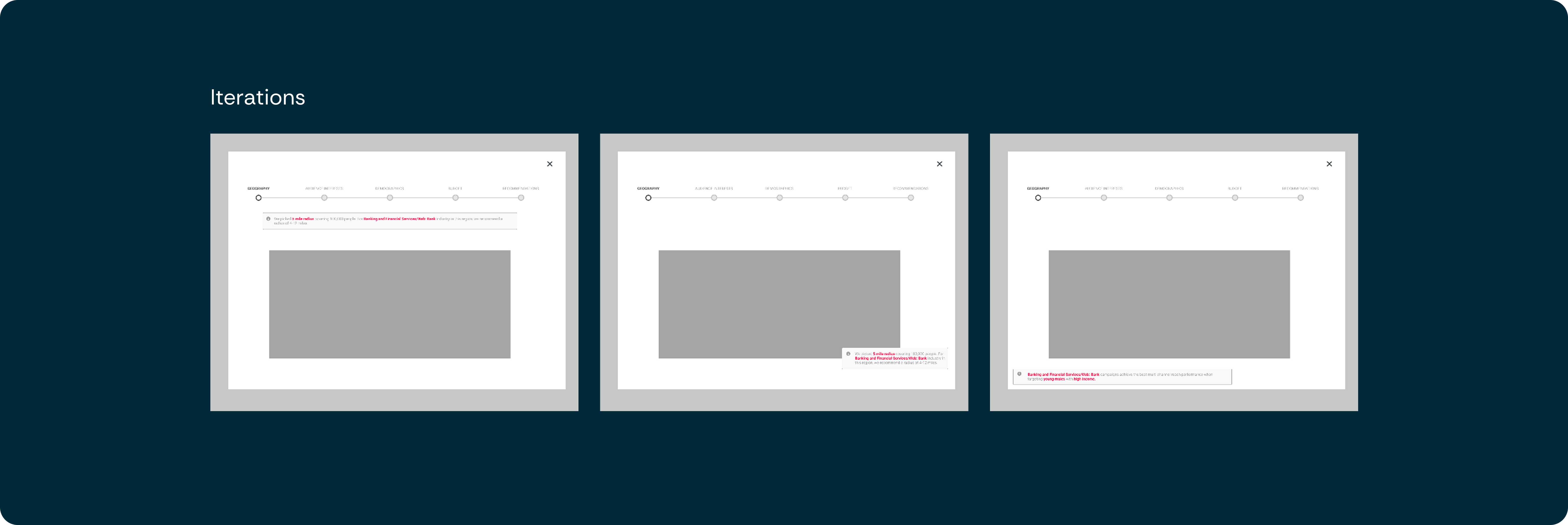
Exploring different placements for system guidance to make recommendations easier to understand without overwhelming the UI.
We ran a series of lightweight usability tests to understand how the flow held up in practice.
Participants were asked to build a proposal while thinking out loud. This helped surface gaps that weren’t obvious in design reviews like navigation friction, unclear interactions, and moments were the UI didn’t match user expectations.
From this, we made targeted adjustments, including improving navigation between steps, refining interaction states, and simplifying areas where users felt overwhelmed.

Usability testing revealed gaps in navigation and interaction clarity across the flow.
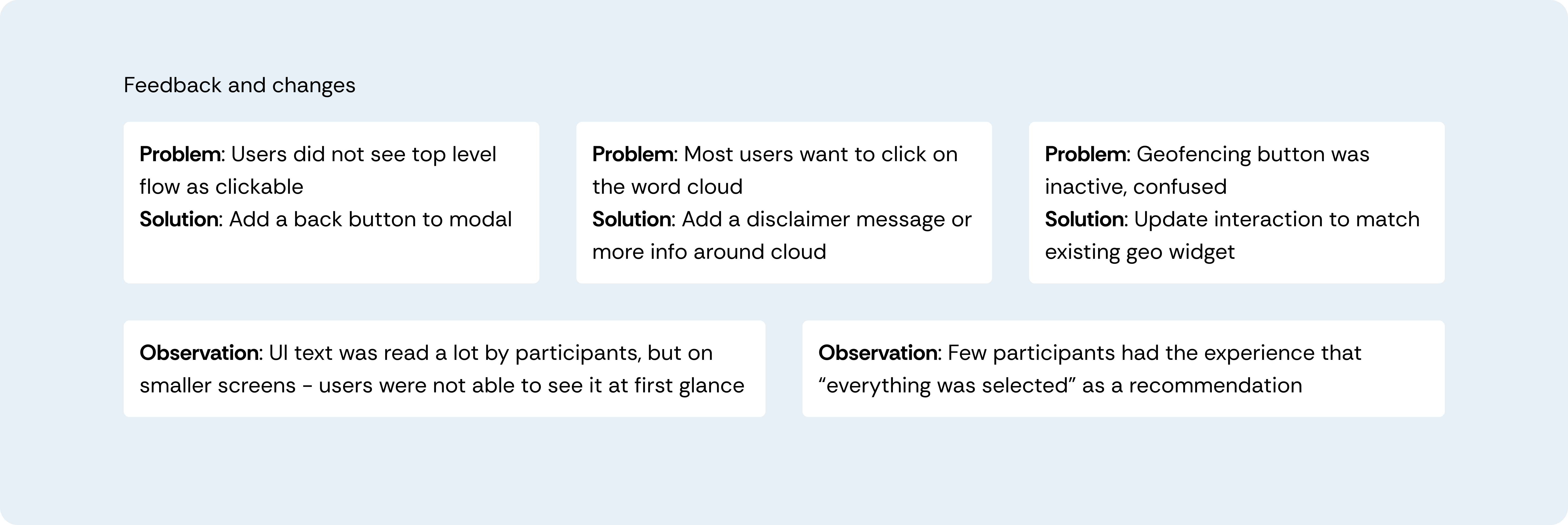
Key issues identified during testing led to clearer interactions nad improved guidance.
SmartProposal introduced a more structured and scalable way to create media proposals.
What was previously a manual, time-heavy process became a guided workflow that helped users move faster and with more confidence. It also created a more consistent foundation for how proposals were built across teams.
After launch, a major client reported a 35% increase in booked revenue within six months, driven in part by the ability to generate stronger, data-backed proposals.
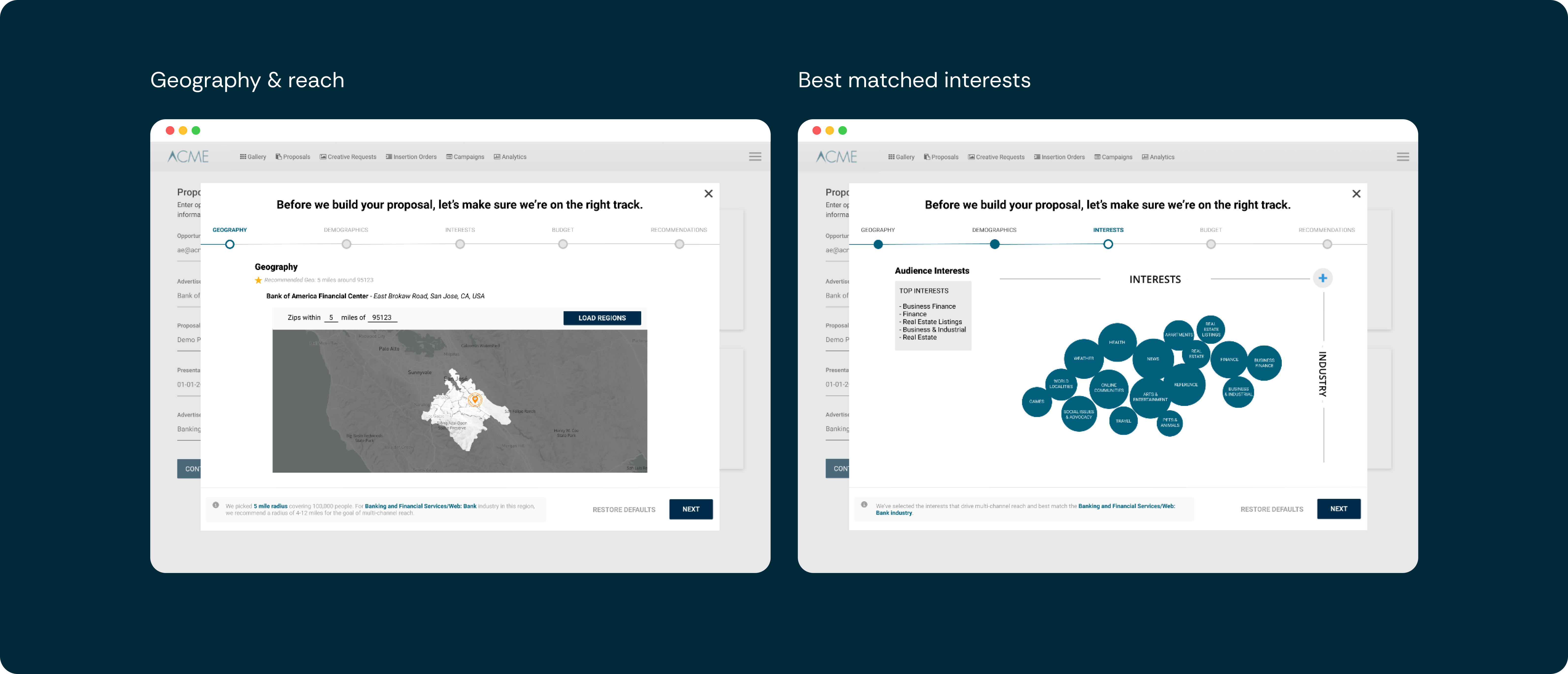
Key issues identified during testing led to clearer interactions and improved guidance.
